
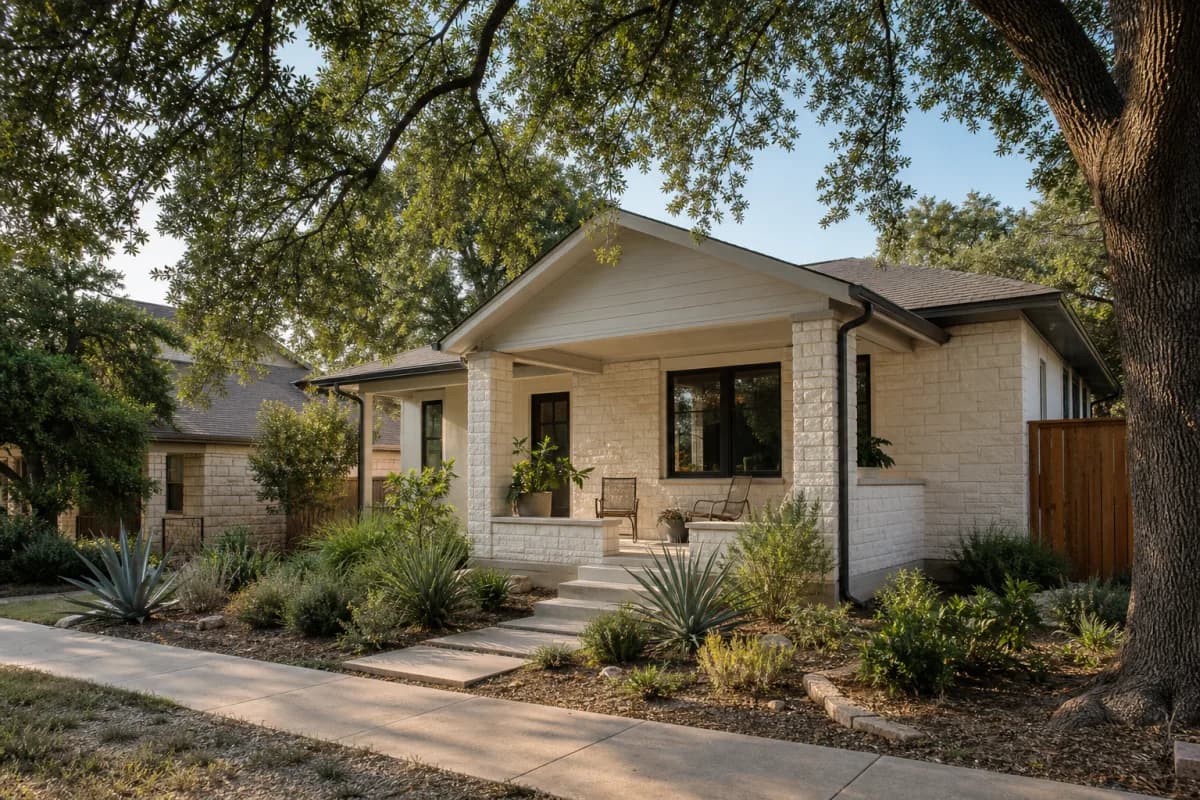
Shade and drainage are not side notes in an Austin listing. They shape how the property and its outdoor areas work each day.
Those conditions still vary by lot and structure. Describe the subject property instead of relying on a city stereotype.
Match improvements to the record
Confirm the address, lot, permits, additions, system work, and improvement dates. Keep invoices and approvals in the listing source file.
Walk the property with the record in hand. Note any space or feature that needs more research.
Do not describe a conversion as permitted living area until the applicable record supports that statement.
Read the path of water
Record grading, roof drainage, low areas, nearby creeks, and visible water-control features. Use current official sources for flood information.
The City of Austin provides FloodPro maps and floodplain information.
The city describes the map as a geographic reference. Ask qualified professionals about engineering, insurance, survey, and legal questions.
Do not reduce flood information to a single marketing phrase. State the source, its date, and its limits.
Photograph shade at a useful hour
Show roof overhangs, window exposure, shade trees, and covered outdoor areas. Record when the photographs were taken.
Add heating, ventilation, and air conditioning (HVAC) records when they support an equipment claim.
Do not call a home energy-efficient without evidence. Use utility history, equipment records, recognized ratings, or a qualified assessment.
Describe the outdoor area as it is
Record patio condition, shade by time, drainage, fencing, water use, and maintenance needs. Photograph the area in representative light.
State the feature instead of promising comfort. A covered patio gives shade at certain hours. The buyer can decide how that affects use.
Use measured location details
Give exact distances or tested travel times for relevant destinations. State when you tested a travel time.
Avoid claims about safety, schools, or the type of buyer who belongs in the area. Use neutral facts that a buyer can verify.
Assemble the listing
- Lead with a verified property feature.
- Explain the layout and daily path.
- Show shade, drainage, and outdoor access.
- Support energy and improvement claims with records.
- Add measured access to relevant destinations.
- Complete accuracy and fair housing reviews.
Recheck time-sensitive sources before publication. Ask qualified professionals about Texas disclosures, title, contracts, and legal questions.